
Expanded clay
Expanded clay: what it is for and how to use it in a pot
Expanded clay (LECA) consists of pellets of fired, expanded clay. It is light and porous, and does not rot, so it can be used in several ways.
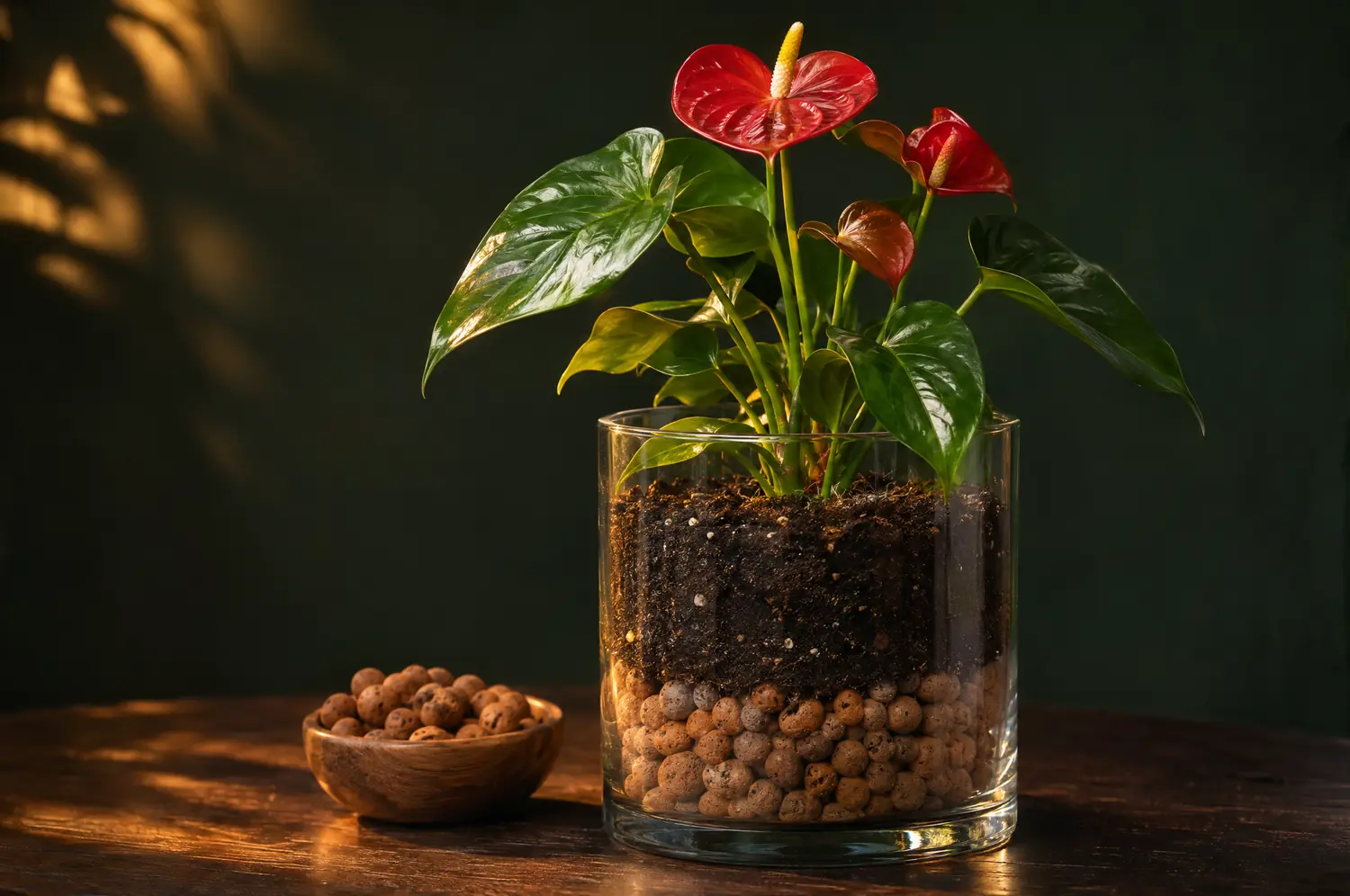
Many people have seen the brown pellets in the bottom of a pot, but few make full use of them. Expanded clay does three jobs: it drains excess water, loosens the soil and decorates the surface. That is why one pack lasts a long time, and it can be used more than once.
1. Drainage in the bottom of the pot
A 2–3 cm layer in the bottom helps excess water move away below the roots more easily. The important thing is that the pot still has a drainage hole. Expanded clay on its own is no substitute for a hole.
In larger pots the layer can be up to 4 cm, roughly a fifth of the height of the pot. On top of the expanded clay goes a little soil, then the plant, then the rest of the soil. The whole process is in our article on how to repot a houseplant.
2. A soil additive
Mixed into soil, expanded clay makes it airier and helps air reach the roots. Being porous, it can take up some water and slowly release it back to the plant.
Perlite does the same job, but its granules are finer and lighter, so they mix in more evenly. That is why perlite is more often added to soil for succulents and cacti, while expanded clay is kept for the bottom and the surface. We describe the ratios in our article on soil for succulents and cacti.
3. A decorative layer
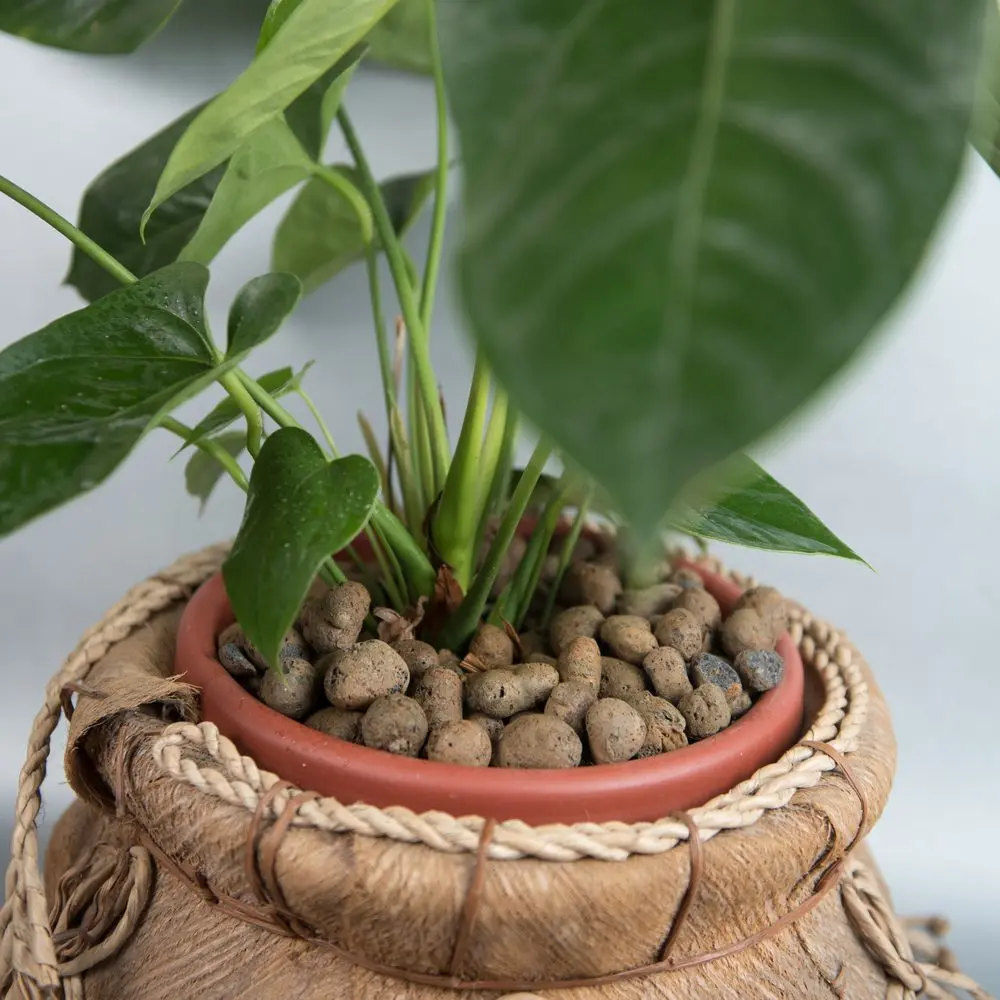
On top of the soil in a pot, expanded clay looks neat and reduces evaporation, and the soil splashes less when you water. It looks particularly good with plants such as anthuriums.
A layer on the surface has one more advantage: the top layer of soil stays covered, so there are fewer gnats around the pot too.
How much expanded clay you need
| Pot | Drainage layer | Expanded clay, roughly |
|---|---|---|
| Small, up to 12 cm | about 2 cm | a handful or two |
| Medium, around 20 cm | 2–3 cm | about 0.5 L |
| Larger, around 30 cm | 3–4 cm | about 2 L |
| Window box, 80 × 20 cm | 2 cm | about 3 L |
The quantities are approximate and derived from the dimensions of the pot. The 5 L pack is enough for several repottings, while the larger 35 L pack is the one to choose when you are planting many window boxes at once.
Things to bear in mind
- You can rinse off the dust before use if you wish.
- With plants grown in water or in hydroponics it behaves differently, so follow the instructions for your system.
- For using it together with soil, see also our repotting guide.
Common mistakes
Expanded clay in a pot without a hole
The water then collects at the bottom, among the pellets, and sooner or later the roots reach it. A drainage layer only makes sense when the excess water can get out.
Too thick a layer
If expanded clay takes up half the pot, too little soil is left for the roots. Stick to a fifth of the height.
Throwing it away after repotting
Expanded clay does not break down or rot. Wash it and use it again.
Expanded clay or perlite?
It is not one or the other. Expanded clay goes below and above the soil, and perlite goes into the soil itself. When you repot a houseplant you usually need both, along with a bag of Humovit.
See expanded clay and perlite in our range of additives.
Questions and answers
What is expanded clay?
Expanded clay (LECA) consists of pellets of fired, expanded clay. It is light and porous, and does not rot.
How much expanded clay goes in the bottom of a pot?
A layer of 2–3 cm, or up to 4 cm in larger pots, roughly a fifth of the height. The soil goes on top of it.
Does expanded clay replace the hole in a pot?
No. A layer of expanded clay helps excess water move away below the roots, but the pot must still have a drainage hole.
Can expanded clay be reused?
Yes. When you repot, separate it out, wash it and put it back in the bottom of the new pot.
What pack sizes is expanded clay sold in?
We pack expanded clay in 5 L and 35 L packs.